
What is money… really?
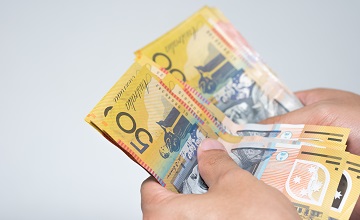
That $50 note in your pocket. What’s it worth? “$50,” you say, probably thinking it’s a dumb question. But is it really? Or a sheet of plastic and a bit of ink that likely cost the note printer less than a cent? Your $50 note only has value because the government declares that it does.
This lack of intrinsic value means your $50 note, and the balances of bank accounts that represent most money in circulation, might better be described as currency rather than ‘real money’.
Over the past few thousand years all sorts of items have been used as currency, from shells and cocoa beans to soap and cigarettes. But to be considered real money, several key criteria need to be met. The most important are that it is:
- Recognised as a medium of exchange and accepted by most people within an economy.
- Durable.
- Portable, having a high value relative to its weight and size.
- Divisible into smaller amounts.
- Resistant to counterfeiting.
- A store of value over long timeframes.
- Of intrinsic value, i.e. not reliant on anything else for its value.
Throughout history gold and silver have come closest to meeting these and other criteria, though nowadays you’ll have difficulty in paying for your groceries with gold Krugerrands. Also, you’ll want to keep your gold and silver in a safe place, and it was people seeking to do just that which gave rise to paper money and our current system of bank-created money.
What started out as a good idea…
Centuries ago goldsmiths would take in gold and silver for safekeeping and issue the owners receipts, or notes, confirming the amount of gold held. The depositors soon discovered that these notes could be used for payment in place of the physical gold, but the goldsmiths noticed something else. It was rare for anyone to redeem all their notes at once. They saw the opportunity to issue notes as a loan that borrowers paid back over time, with interest. Provided borrowers paid back their loans on time and only a small proportion of owners wanted their gold back at any given time, all was well, and goldsmiths transformed into bankers.
But this didn’t always work out. An economic shock might see everyone wanting their gold back, and if the bank couldn’t deliver the full amount that was demanded, it went broke. To help prevent this, many countries created central banks, with some governments even acting as lender-of-last-resort. While government control and the rules around banking have evolved over time, private banks are still the source of most currency created today.
When things get real
In economically stable times it’s easy to think of currency and real money as the same thing. However, a couple of examples reveal the difference between the two. One is when a government starts printing money to pay for its programs. Inflation usually results, and the value of currency can plummet. In the case of hyperinflation, paper money and bank deposits can quickly become worthless as happened in Germany in the 1920s.
The difference between currency and real money and the issue of intrinsic value has implications for other investments. If you would like to learn more, talk to us. We’re here to help.
The information provided in this article is general in nature only and does not constitute personal financial advice.